
ChatGPT is transforming how people find information online, and millions are now turning to AI chat instead of traditional search engines for answers. If you’re a content creator, marketer, or business owner, you need to understand this shift before your competition does.
Users are choosing ChatGPT because it delivers direct answers without clicking through multiple websites or sorting through ads. This change is reshaping how content gets discovered and consumed online.
You’ll learn how ChatGPT actually outperforms Google in specific scenarios that matter to your audience. We’ll also dive into proven strategies to optimize your content for ChatGPT discovery, including the technical changes that can make your brand more visible in AI-generated responses. Finally, you’ll discover how to build lasting brand recognition within ChatGPT results so users remember and seek out your expertise.
The Rise of ChatGPT as a Search Alternative
Instant Conversational Answers vs Traditional Link Lists
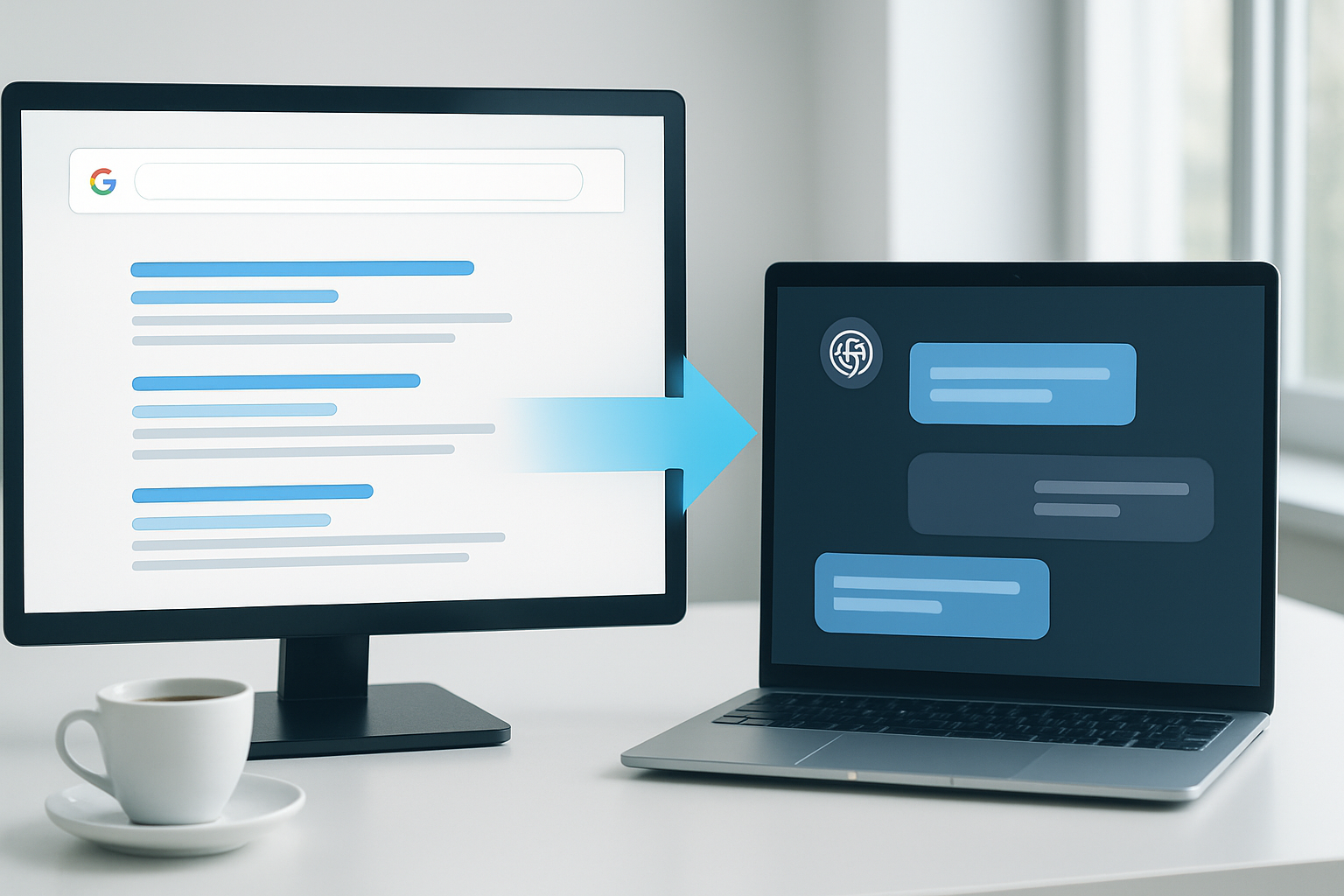
When you search on Google, you get a list of blue links and hope one of them has your answer. You click through multiple pages, scan content, and piece together information from different sources. This process can take minutes or even hours for complex questions.
ChatGPT flips this experience completely. You ask your question in natural language, and within seconds, you receive a comprehensive, conversational response that directly addresses what you’re looking for. No clicking through websites, no sifting through irrelevant content, no wondering if you’ve found the best answer.
Your search experience becomes more like having a knowledgeable friend who can instantly pull together information from countless sources and present it in exactly the way you need it. Whether you’re asking for a recipe, troubleshooting a technical issue, or seeking creative ideas, you get immediate, actionable responses rather than homework assignments.
Complex Query Processing Without Multiple Searches
Google forces you to break down complex questions into simpler searches. Need to plan a week-long trip to Japan with dietary restrictions and a specific budget? You’ll typically run separate searches for flights, accommodations, restaurants, itineraries, and budget calculations.
ChatGPT handles these multi-layered queries in one conversation. You can ask: “Plan a 7-day vegetarian-friendly trip to Tokyo for under $2000, including flights from Chicago, mid-range hotels, and daily activity suggestions.” You’ll receive a comprehensive response that addresses every aspect of your request.
Your follow-up questions build naturally on the previous context. You can refine details, ask for alternatives, or dive deeper into specific aspects without starting over. This conversational flow mirrors how you’d actually discuss complex topics with a human expert, making your search process more intuitive and efficient.
Personalized Response Generation
Google shows the same results to everyone searching identical terms. Your personal context, expertise level, and specific needs rarely influence what you see in search results.
ChatGPT adapts its responses to your situation. When you ask about investing, you can specify whether you’re a beginner or experienced trader, your risk tolerance, and your goals. The response you receive will be tailored to your specific circumstances rather than generic advice that may or may not apply to you.
Your conversation history also informs future responses. ChatGPT remembers what you’ve discussed and can reference previous topics, building on your ongoing interests and needs. This creates a personalized search experience that becomes more valuable over time as the AI learns about your preferences and communication style.
Growing User Adoption Statistics
Your shift toward AI-powered search reflects a broader trend. ChatGPT reached 100 million users faster than any consumer application in history, achieving this milestone in just two months. Compare that to TikTok’s nine months or Instagram’s two and a half years.
Recent surveys show that over 30% of users now turn to ChatGPT for information that they previously would have googled. This number jumps to nearly 50% among users under 30, indicating a generational shift in search behavior that’s accelerating rapidly.
Your daily search habits are likely already changing without you realizing it. You might still google simple factual queries, but for complex questions, creative tasks, or situations requiring detailed explanations, you’re probably finding ChatGPT more helpful than traditional search engines.
How ChatGPT Outperforms Google in Key Areas

Zero-Click Answer Delivery
When you search on Google, you often find yourself clicking through multiple links, scanning snippets, and piecing together information from different sources. ChatGPT changes this entire experience by delivering comprehensive answers directly in your conversation. You ask a question, and you get a complete response without needing to visit another website.
This zero-click approach saves you significant time and mental energy. Instead of evaluating search results, comparing sources, and synthesizing information yourself, ChatGPT does the heavy lifting. You receive structured, well-organized answers that address your specific query without the distraction of ads, pop-ups, or irrelevant content that typically clutters traditional search results.
The conversational format also means you can refine your question immediately if the initial response doesn’t quite hit the mark. You don’t need to reformulate your search query and start over—you simply clarify what you’re looking for in natural language.
Context Understanding and Follow-up Questions
Your conversations with ChatGPT build on themselves in ways that Google searches simply can’t match. When you ask a follow-up question, ChatGPT remembers your previous queries and maintains context throughout your entire conversation thread.
This contextual awareness transforms how you gather information. You can start with a broad question about digital marketing, then dive deeper into specific strategies, ask for examples relevant to your industry, and even request implementation steps—all without repeating background information. ChatGPT connects the dots between your questions and provides increasingly targeted responses.
The natural conversation flow eliminates the frustration of repeatedly explaining your situation or starting from scratch with each new search. You can explore topics organically, ask clarifying questions, and build on previous answers in a way that mirrors how you’d discuss complex topics with a knowledgeable colleague.
Creative and Analytical Task Assistance
ChatGPT excels at tasks that go beyond simple information retrieval. When you need help brainstorming ideas, analyzing data, or solving complex problems, ChatGPT becomes a collaborative partner rather than just a search engine.
You can ask ChatGPT to help you write emails, create content outlines, analyze business scenarios, or even debug code. The AI doesn’t just point you toward resources—it actively participates in completing your task. Whether you need to generate multiple variations of a marketing headline, break down a complex process into actionable steps, or get feedback on your ideas, ChatGPT provides hands-on assistance.
This capability particularly shines when you’re working on creative projects or need analytical thinking. You can bounce ideas back and forth, refine concepts through dialogue, and receive customized solutions tailored to your specific requirements. Google might show you articles about creativity techniques, but ChatGPT actually helps you apply those techniques to your particular challenge.
The AI can adapt its communication style to match your needs, whether you want technical explanations, simplified summaries, or creative alternatives. This flexibility makes ChatGPT feel less like a tool and more like a versatile assistant who understands your working style.
The Search Behavior Revolution

From Keywords to Natural Language Queries
You’ve probably noticed how your search behavior has changed recently. Instead of typing fragmented keywords like “best Italian restaurant NYC,” you’re now asking ChatGPT complete questions like “What’s the best Italian restaurant in Manhattan for a romantic date night under $100 per person?” This shift represents a fundamental change in how you approach information seeking.
ChatGPT encourages you to express your queries the way you naturally think and speak. You no longer need to guess which keywords might trigger the right results or worry about search engine algorithms interpreting your intent. When you ask ChatGPT about complex topics, you can include context, specify your level of expertise, and even mention your personal preferences—all in one natural sentence.
This conversational approach means you’re getting more precise answers because your queries contain more nuanced information. Rather than sifting through multiple search results to piece together what you actually want to know, you’re having a dialogue that gets refined with each exchange.
Information Synthesis Instead of Source Hunting
Your relationship with information has transformed dramatically. Before ChatGPT, you’d open dozens of browser tabs, scanning headlines and snippets to find relevant information across multiple sources. Now, you’re receiving synthesized answers that combine insights from various sources into coherent, actionable responses.
You no longer spend time evaluating the credibility of individual websites or cross-referencing information across different platforms. ChatGPT processes and distills information for you, presenting key points in a structured format that directly addresses your specific question. This saves you hours of research time and mental energy.
When you need to understand complex topics, you’re getting explanations tailored to your background knowledge rather than one-size-fits-all content designed for search engine optimization. The AI can adjust its explanations based on whether you’re a beginner or have advanced knowledge in a particular field.
Single Session Problem Solving
Your problem-solving approach has become more efficient and focused. Instead of conducting multiple searches across different sessions and platforms, you’re resolving complex issues within single conversations with ChatGPT. You can ask follow-up questions, request clarifications, and dive deeper into specific aspects without losing context.
This continuity means you’re building on previous parts of your conversation rather than starting fresh with each query. If you’re planning a vacation, you can discuss destinations, then immediately move to budget considerations, accommodation options, and activity recommendations—all within the same conversation thread.
You’re also getting personalized assistance that remembers your preferences and constraints throughout the conversation. When you mention you’re vegetarian or have a specific budget, ChatGPT maintains this context as you explore different aspects of your query.
Reduced Search Engine Dependency
Your daily information-seeking habits are shifting away from traditional search engines. You’re finding that ChatGPT can handle most of your informational needs without requiring you to visit multiple websites or navigate through advertising-heavy search results pages.
For routine questions about definitions, explanations, how-to instructions, and general knowledge, you’re bypassing Google entirely. This reduction in search engine dependency is most noticeable for queries that previously required you to visit multiple sources to get complete answers.
You’re still using traditional search for specific types of queries—like finding local business hours, checking real-time information, or shopping for specific products. However, your overall search volume on traditional engines has likely decreased as ChatGPT handles your educational, explanatory, and advisory information needs more effectively than the fragmented approach of traditional web search.
Understanding ChatGPT’s Content Sources and Training

Web Crawling and Data Integration Methods
ChatGPT doesn’t crawl the web in real-time like Google’s search bots. Instead, your content gets incorporated into ChatGPT’s knowledge base through massive data collection processes that happened during its training phases. OpenAI trained ChatGPT on diverse datasets including web pages, books, articles, and other text sources available up to specific cutoff dates.
When you publish content online, there’s no guarantee it will immediately become part of ChatGPT’s knowledge base. The AI model learns from static snapshots of internet data rather than continuously updated information. Your website content might have been included if it was publicly available and crawlable during ChatGPT’s training data collection periods.
The integration process involves sophisticated filtering and processing mechanisms. OpenAI doesn’t simply dump raw web data into the model. They apply quality filters, remove duplicate content, and process information to create a comprehensive knowledge base. Your content’s likelihood of inclusion depends on factors like accessibility, content quality, and whether it was indexed by major search engines during data collection windows.
You should know that ChatGPT’s training involves multiple data sources beyond just web crawling. Academic papers, reference materials, news articles, and structured databases all contribute to its knowledge base. This means your content competes not just with other websites, but with authoritative sources across various formats and platforms.
Knowledge Cutoff Limitations and Updates
Your content strategy must account for ChatGPT’s knowledge cutoff limitations. Different versions of ChatGPT have different training data cutoffs, meaning information published after these dates won’t be reflected in the model’s responses. For instance, if you published groundbreaking content last month, ChatGPT might not know about it yet.
These cutoffs create both challenges and opportunities for your content approach. While recent content might not be immediately accessible through ChatGPT, evergreen content published before the cutoff dates can continue providing value. You need to balance creating timely content with developing comprehensive resources that remain valuable regardless of knowledge cutoffs.
OpenAI periodically releases updated models with more recent training data, but these updates don’t happen continuously. Your content might become visible in ChatGPT responses only when newer model versions are released. This unpredictable timeline means you can’t rely on immediate visibility for new content.
Understanding these limitations helps you set realistic expectations for ChatGPT optimization. Focus on creating high-quality, comprehensive content that addresses fundamental topics in your industry. These pieces have better chances of being included in training data and remaining relevant across different model versions.
Source Attribution and Credibility Factors
ChatGPT rarely provides direct source citations in its responses, making it challenging to track how your content influences its outputs. Unlike Google search results where you can see clear attribution and click-through opportunities, ChatGPT synthesizes information from multiple sources without explicit crediting. This means your content might inform ChatGPT’s responses without generating direct traffic to your website.
Your content’s credibility plays a significant role in how ChatGPT incorporates and weighs information. The AI model appears to give more weight to information from authoritative sources, established publications, and well-structured content. Building your website’s authority through quality backlinks, consistent publishing, and expert authorship can improve your content’s influence on ChatGPT’s knowledge base.
Several factors seem to influence how ChatGPT treats information from different sources:
- Domain authority and reputation
- Content depth and comprehensiveness
- Factual accuracy and consistency
- Citation of reputable sources within your content
- Professional presentation and structure
You can improve your content’s credibility by following journalistic standards, citing authoritative sources, and maintaining consistency across your publications. While you can’t directly control how ChatGPT attributes or weights your content, focusing on these credibility factors increases the likelihood that your information will be accurately represented in AI responses.
The lack of direct attribution in ChatGPT responses shifts the value proposition from traffic generation to brand awareness and thought leadership. Your expertly crafted content might influence thousands of ChatGPT interactions without generating a single click, but it builds your reputation as a trusted information source in your field.
Strategies to Optimize Content for ChatGPT Discovery

Create Comprehensive Topic Authority
When you want ChatGPT to recognize your content as the go-to source, you need to build comprehensive topic authority that goes beyond surface-level coverage. Think of yourself as creating the ultimate resource that answers not just the main question, but every related question your audience might have.
Start by mapping out all the subtopics, related questions, and different angles within your niche. If you’re writing about email marketing, don’t just cover the basics – dive into segmentation strategies, deliverability issues, automation workflows, and compliance requirements. ChatGPT draws from sources that demonstrate complete understanding of a topic.
Your content should connect related concepts naturally. When you discuss one aspect, reference how it relates to other elements within the same topic ecosystem. This creates a web of relevance that AI systems recognize as authoritative. Include case studies, real-world examples, and practical applications that showcase your deep understanding.
Create content clusters around your main topics. Publish multiple pieces that explore different facets of the same subject area. This approach signals to AI systems that you’re a reliable source for comprehensive information on specific topics.
Structure Content for AI Comprehension
Your content structure directly impacts how well ChatGPT can process and reference your information. AI systems excel at understanding clearly organized, logically structured content that follows predictable patterns.
Use hierarchical heading structures consistently. Start with your main topic as an H2, break it into subtopics with H3s, and use H4s for specific points. This creates a clear information architecture that AI can easily parse and understand.
Break your content into digestible sections with clear transitions. Each paragraph should focus on one main idea, making it easier for AI to extract specific information when needed. Use bullet points and numbered lists to present complex information in scannable formats.
Include contextual information early in your content. AI systems often prioritize information that appears near the beginning of articles, so front-load your most important insights and key takeaways.
Create logical flow between sections. Each part of your content should build upon the previous section, creating a coherent narrative that AI can follow and understand in context.
Focus on Question-Answer Format Optimization
ChatGPT excels at answering direct questions, so structuring your content around common questions in your field increases your chances of being referenced. Research the actual questions your audience asks using tools like Answer the Public, Reddit threads, and industry forums.
Embed natural question phrases within your headers and subheaders. Instead of writing “Social Media Strategy Tips,” try “How Do You Create an Effective Social Media Strategy?” This format aligns perfectly with how people interact with ChatGPT.
Create FAQ sections within your longer content pieces. These sections serve as quick reference points that AI can easily extract and cite when answering related questions.
Use conversational language that mirrors how people actually ask questions. Write as if you’re responding to a colleague who just asked you for advice over coffee. This natural tone makes your content more likely to match the conversational style of ChatGPT interactions.
Address follow-up questions within your answers. When you answer a main question, anticipate what someone might ask next and provide that information too. This comprehensive approach makes your content more valuable to AI systems looking for complete answers.
Develop Expertise-Based Content Depth
Shallow content won’t cut it in the age of AI search. You need to demonstrate genuine expertise through detailed, nuanced explanations that showcase your deep understanding of the subject matter.
Share specific methodologies, frameworks, and step-by-step processes. Don’t just tell people what to do – explain exactly how to do it, why it works, and what to expect. Include the kind of insider knowledge that only comes from real experience.
Reference current industry trends, recent developments, and emerging best practices. AI systems favor content that reflects up-to-date knowledge and awareness of the evolving landscape.
Include data, statistics, and concrete examples to support your points. Back up your advice with evidence and real-world results whenever possible. This credibility boost helps AI systems view your content as authoritative.
Address common misconceptions and mistakes within your field. When you can identify and correct widespread misunderstandings, you position yourself as a trusted expert who provides accurate, reliable information.
Discuss edge cases, exceptions, and nuanced scenarios. Expert-level content acknowledges that simple answers don’t always apply to complex situations. This depth of understanding sets your content apart from generic advice.
Technical SEO Adaptations for AI Search

Schema Markup for Enhanced Data Recognition
Your website’s schema markup acts as a translator between your content and AI systems like ChatGPT. When you implement structured data properly, you’re essentially providing a roadmap that helps AI understand exactly what your content is about and how it connects to user queries.
Start by adding Organization schema to establish your brand’s identity and credibility. Include details like your business name, logo, contact information, and social media profiles. This foundational markup helps AI systems recognize your authority in your industry.
Product schema becomes your secret weapon for e-commerce sites. You’ll want to include detailed information about pricing, availability, reviews, and specifications. AI systems love this structured approach because it gives them concrete data points to reference when answering user questions about your products.
Don’t overlook FAQ schema – it’s particularly valuable for AI optimization. Structure your frequently asked questions with clear markup that identifies both the question and answer portions. This format mirrors how users naturally ask questions to ChatGPT, making your content more likely to surface in responses.
Article schema helps establish topical authority. Include publication dates, author information, and article sections to give AI systems context about your expertise and the freshness of your information.
Local Business schema matters even more now. If you serve specific geographic areas, make sure your location data, operating hours, and service areas are properly marked up. AI assistants frequently need to provide location-specific recommendations.
Natural Language Processing Optimization
Your content needs to speak the same language as your audience – literally. AI systems like ChatGPT excel at understanding natural, conversational language patterns, so your optimization strategy should reflect how people actually talk and ask questions.
Focus on long-tail keywords that mirror real conversations. Instead of targeting “SEO services,” optimize for phrases like “how to improve my website’s search rankings” or “what makes a website rank higher on Google.” These conversational queries align perfectly with how users interact with AI assistants.
Your sentence structure matters more than you might think. Write in a way that flows naturally when read aloud. Break up complex ideas into digestible chunks, use active voice whenever possible, and vary your sentence lengths to create a rhythm that feels human.
Context becomes everything in AI optimization. When you mention a concept, provide enough surrounding information for an AI system to understand not just what you’re talking about, but why it matters. This contextual richness helps your content get selected for comprehensive responses.
Answer the questions your audience hasn’t asked yet. Think about the follow-up questions that naturally arise from your main topic and address them within your content. This anticipatory approach aligns with how AI systems try to provide complete, helpful responses.
Featured Snippet and FAQ Targeting
Your path to AI visibility runs directly through featured snippet optimization. These coveted “position zero” results train AI systems on what constitutes authoritative, well-formatted answers to user questions.
Create dedicated answer blocks within your content. Start with the question as a clear subheading, then provide a concise, complete answer in 40-60 words immediately below. This format works perfectly for both traditional search engines and AI training data.
Structure your FAQ sections strategically. Group related questions together and ensure each answer stands alone while connecting to your broader expertise. Use clear question formatting and provide answers that satisfy the query completely without requiring additional context.
Table formats work exceptionally well for comparison-based queries. When you’re explaining differences between options, pricing structures, or feature sets, organize the information in clean, scannable tables that AI systems can easily parse and reference.
Your step-by-step guides need special attention. Number your steps clearly, use action-oriented language, and include any necessary warnings or prerequisites upfront. This structured approach makes it easy for AI systems to reference your processes when providing instructional responses.
Build topic clusters around your FAQ content. Create comprehensive hub pages that link to more detailed explanations of each frequently asked question. This interconnected approach demonstrates topical authority and gives AI systems multiple entry points into your expertise.
Building Brand Visibility in ChatGPT Results

Establish Thought Leadership Through Quality Content
Your expertise becomes your currency when ChatGPT references your work. The AI prioritizes content that demonstrates deep knowledge and offers genuine insights rather than surface-level information. Focus on creating comprehensive guides that solve real problems your audience faces.
When you publish original research, case studies, or data-driven insights, you’re building the foundation for ChatGPT to recognize you as an authoritative source. The AI pulls from content that shows clear expertise markers: detailed explanations, practical examples, and evidence-based conclusions.
Create content that goes beyond basic tutorials. Share your unique methodologies, lessons learned from failures, and contrarian viewpoints backed by experience. ChatGPT tends to reference sources that offer fresh perspectives or challenge conventional wisdom when those perspectives are well-supported.
Your thought leadership content should answer questions that your competitors haven’t addressed yet. This gives ChatGPT fewer alternatives to choose from when responding to related queries, increasing your chances of being cited.
Leverage Social Proof and Citations
ChatGPT pays attention to how other credible sources reference your work. When established publications, academic papers, or industry experts cite your content, it signals authority that the AI recognizes.
Build relationships with journalists, researchers, and other thought leaders in your space. Share your expertise freely through interviews, expert roundups, and collaborative content. Each quality mention adds to your credibility score in the AI’s assessment.
Your citation strategy should include:
- Contributing expert quotes to industry publications
- Participating in research studies and surveys
- Guest posting on high-authority websites
- Speaking at conferences and having your presentations referenced
- Collaborating with universities or research institutions
Track where your content gets mentioned and ensure those sources are reputable. One citation from a well-respected industry publication carries more weight than dozens of mentions from low-quality sites.
Create Linkable Asset Development
Your most valuable content pieces should serve as ultimate resources that others naturally want to reference. These linkable assets become the cornerstone of your ChatGPT visibility strategy.
Develop comprehensive resources like industry reports, original studies, detailed how-to guides, and curated lists of tools or resources. Make these so valuable that they become the go-to reference point for specific topics in your niche.
Interactive content performs particularly well as linkable assets. Create calculators, assessment tools, templates, or interactive guides that provide immediate value. When other websites link to these resources, ChatGPT recognizes the cumulative authority these links represent.
Update your linkable assets regularly to maintain their relevance and accuracy. Outdated information can harm your credibility with both human readers and AI systems. Fresh, current content gets prioritized over stale resources.
Monitor Brand Mentions and Accuracy
ChatGPT sometimes gets details wrong when referencing brands or individuals. You need to actively monitor how the AI represents your brand and correct inaccuracies when they appear.
Set up alerts for your brand name, key personnel, and main products or services. Test ChatGPT regularly by asking questions that should reference your work. When you find incorrect information, document it and consider how to strengthen the correct narrative through additional content.
Create a comprehensive brand information hub on your website that clearly states key facts about your company, achievements, and expertise areas. This gives ChatGPT a reliable source to pull from when discussing your brand.
Your monitoring should extend beyond direct brand mentions. Watch for instances where ChatGPT discusses topics in your expertise area without mentioning you, especially when you have strong content addressing those subjects. These gaps reveal opportunities to strengthen your content strategy and improve your chances of being referenced.

ChatGPT isn’t just another tech trend – it’s reshaping how people search for and discover information online. You’ve seen how it delivers personalized, conversational answers that often beat Google’s traditional search results. As more users turn to AI for quick, direct responses instead of scrolling through endless links, your content strategy needs to evolve. The shift from keyword-heavy SEO to creating genuinely helpful, comprehensive content that answers real questions is already happening.
Your success in this new landscape depends on understanding how ChatGPT sources and presents information. Focus on creating content that demonstrates expertise, answers questions thoroughly, and builds your brand’s authority in your field. Start optimizing for conversational queries, ensure your content is easily accessible to AI crawlers, and consistently produce high-quality material that positions you as a trusted source. The brands that adapt now will have a significant advantage as AI search continues to grow and eventually dominates how people find information online.